Can Hair Oil Help With Frizz?

Frizz can mean different things depending on the style you wanted. On one day, it is a few lifted strands around a smooth finish. On another, it is a curl pattern opening up as the weather changes. Sometimes the softness and fullness being called frizz are simply part of your natural texture.
Before choosing a product, decide what you want to change. You might want smoother-feeling ends, more definition in a twist-out or fewer flyaways around a finished style. That is a more useful starting point than treating every visible strand as a problem.
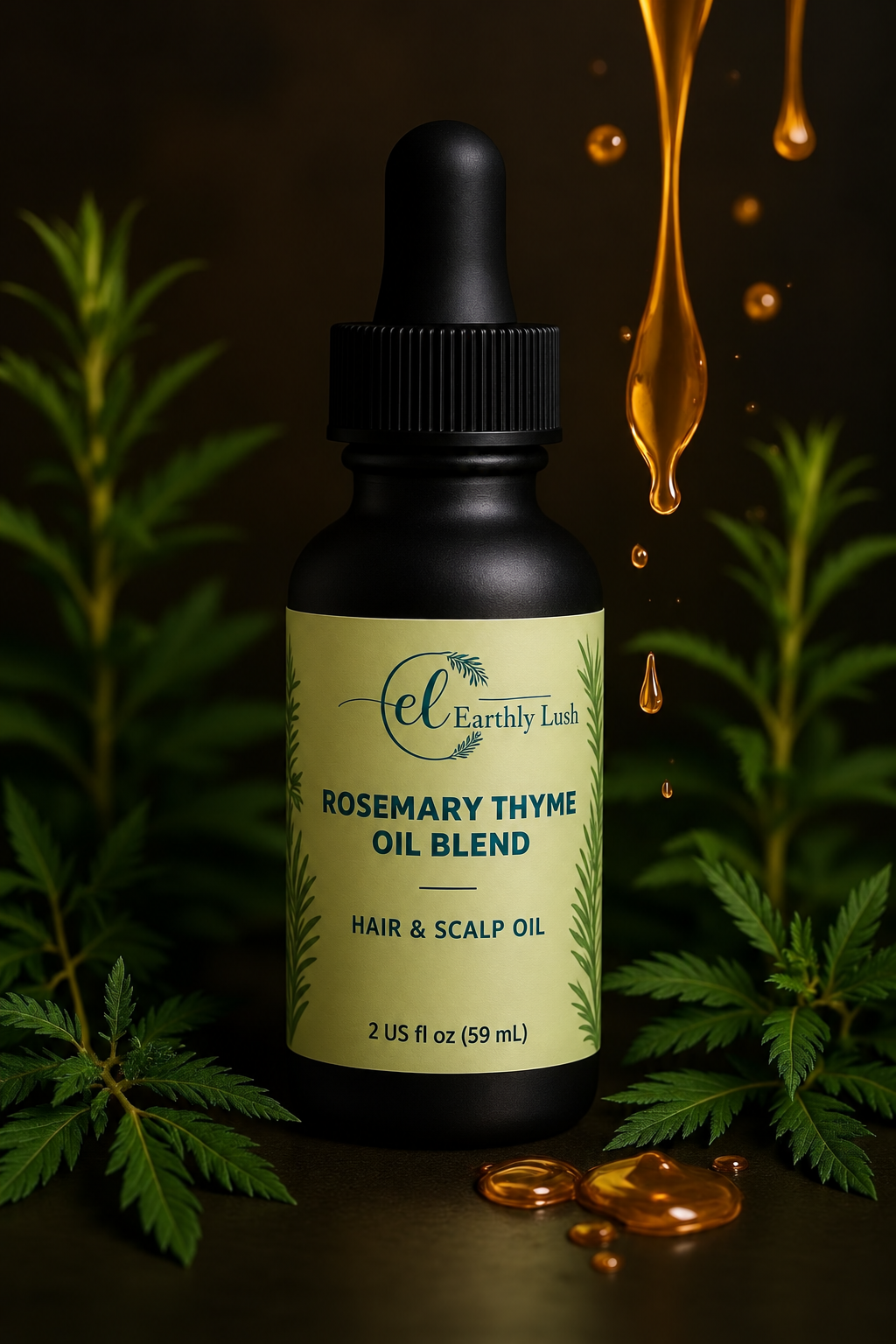
A light oil finish can help with the surface feel and appearance of some hair. Rosemary Thyme Oil Blend can be part of that finishing routine, while conditioning, styling technique and the environment also influence what you see.
Look at the kind of frizz you are noticing
A style can lose its original shape when strands separate from the groups you arranged them into. Handling, friction, moisture in the air and the condition of the fibre can all influence the result.
Roughness through the ends may have a different cause from a halo of short hairs near the crown. Some shorter hairs are new growth; others may be breakage. An oil application cannot identify the cause simply by making them less visible for a while.
Notice when the change appears. Does the style look the way you want until you repeatedly touch it? Does it change after sleeping? Does the rough feel remain even after washing and conditioning? These observations give you a better next step than adding a product to the entire head.
What a finishing oil can contribute
Oils are used in hair care for lubrication and their effect on the appearance and feel of the hair surface. A thin application can make some rough-feeling areas feel smoother and add shine.
That is a useful finishing role, but it should not be confused with permanent repair or a guarantee against humidity. The behaviour of a finished formula depends on its ingredients and how it is used. We do not claim that Rosemary Thyme Oil Blend makes a style humidity-proof.
Think of the oil as one way to refine the finish you already have. If the hair needs more conditioning or the style needs a product designed for hold, extra oil may not address the reason it keeps opening up.
Start the finish during wash day
If your hair is difficult to manage before styling begins, look at the conditioning and detangling steps. Dermatology guidance recommends appropriate conditioning and gentle handling, particularly for curly hair.
Distribute your conditioner where the lengths need it and follow its rinse-out or leave-in directions. Detangle in manageable sections using a method that avoids unnecessary pulling. A smoother styling process can matter as much as what you apply at the end.
When you use several products, introduce changes gradually. If you replace the conditioner, add a new gel and double the oil in one session, it becomes hard to know which change helped or which caused a coated finish.
Apply with the style in mind
For a finishing application, our care card starts with two to three drops spread between the palms and smoothed over damp or dry mid-lengths and ends. Use less for a light style or fine hair.
If your curls or twists are already formed, avoid repeatedly raking your fingers through them simply to distribute oil. A gentle smoothing pass may preserve more of the shape you worked to create. Focus on the sections you want to refine rather than touching every part again.
For a sleek finish, start with a small area and check the effect before adding more. If the hair begins to feel coated, stop. Greater shine does not always mean that the style is becoming easier to maintain.
Pay attention to friction between styling days
Repeated rubbing from clothing, a pillowcase or vigorous towel drying can disturb a style. So can constant touching throughout the day. You do not need to eliminate every source of contact, but it helps to notice where the most friction happens.
A comfortable nighttime arrangement and a smooth scarf, bonnet or pillowcase may help you preserve the style you enjoy. Avoid making the bedtime style tight in an effort to keep every strand in place.
If you notice the same rough patch after each night, adjust the way you arrange or cover that area before deciding it needs a larger daily dose of oil.
Choose the result that feels like you
There is room for smooth styles, soft volume, defined curls and hair that changes shape during the day. Your texture does not have to disappear for the routine to count as successful.
Assess the oil by the benefit you wanted: do the ends feel better during handling, does the finish look more even, and is the amount comfortable? Those are useful questions even if a few strands remain visible.
At Earthly Lush, “made for your crown” should leave space for your preferences. Use the oil to support the way you want to wear your hair, with a clear idea of its finishing role and without turning natural texture into something you must constantly correct.


Comments