Why Does My Hair Feel Greasy After I Oil It?

There is a point between “my hair feels smoother” and “I wish I had used less.” If you have crossed it, you know that a good ingredient list is only part of the experience. How much you apply, where it lands and what is already on your hair can change the finish.
A greasy result is useful feedback. It does not make your hair difficult, and it does not automatically mean that every oil will feel wrong on you. Start by identifying what feels heavy: the roots, a single section, the whole length or the combination of products in your style.
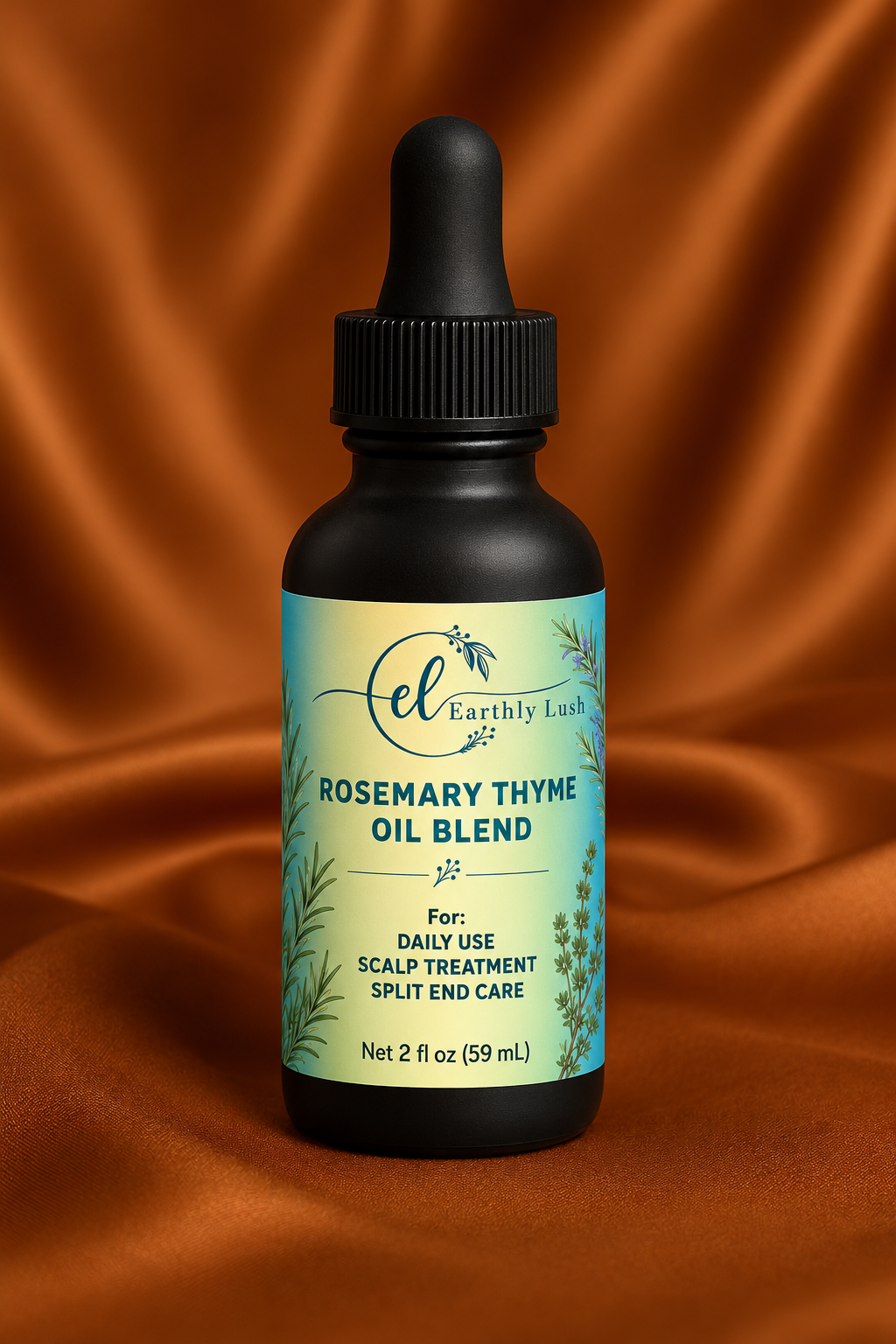
With Rosemary Thyme Oil Blend, a light finishing application is a good place to learn. Our care card begins with two to three drops spread across the palms for damp or dry mid-lengths and ends. You can begin with less when you want a lighter finish.
The same dose can land very differently
A few drops placed directly on one area can look and feel heavier than the same amount spread thinly across your palms and distributed through the lengths. Placement changes the concentration of oil in each section.
If the roots are already naturally oily or carrying styling product, an extra coating there may reduce the volume you want. Your ends may still benefit from attention. Treating both areas identically can make the whole application feel unsuccessful even when only the placement needs to change.
For the next finishing application, start at the ends. Use what remains on your palms to smooth the areas above them if needed. Do not automatically return for another dose just because the hair nearer the scalp has not been covered.
Your starting routine matters
Hair oil is rarely the only product involved. Leave-in conditioner, a rich cream, edge products and styling butter can all contribute to the final feel. A dose that works over a light routine may be too much over several richer layers.
Look back at the application that felt best. Was it soon after washing? Had you skipped a cream? Were you wearing a style that needed more movement and less hold? Comparing those conditions can reveal a more useful adjustment than changing products immediately.
You can also leave a step out when you do not need it. If your hair already feels comfortable and looks the way you want, you do not have to add an oil finish to complete a checklist. Using a product deliberately includes knowing when a fresh application would add little.
Work in sections without doubling the dose
Sectioning is helpful when the outer layer gets most of the product while the hair underneath receives very little. It improves access, but it can also lead to overapplication if every section gets a full starting dose.
Spread a small amount across your hands, work through a manageable area and reassess. If your palms still have enough oil to glide over the next section, use that before dispensing more. The aim is a thin, even finish rather than treating each section as a separate full head of hair.
For fine or lower-density hair, an especially light touch may suit the style. For dense hair, careful distribution may matter more than starting with a larger pour. Strand thickness, length, density and the desired finish all contribute to the decision.
Give the result a moment before adding more
Some styling routines encourage constant adjustment: a little here, a little there, then another layer because one section looks different. By the end, it becomes difficult to remember how much has been applied.
After the first pass, let the hair settle and check it in ordinary light. Feel whether it moves comfortably and whether the ends have the smoothness you wanted. A subtle finish may suit you better than the most reflective one you can create.
If you want more volume, preserve that as part of your goal. There is no need to trade away a style you enjoy simply to make the hair appear more heavily oiled. Your preferred balance matters.
What to do if you have already applied too much
Stop adding product and avoid trying to balance the coating with several unrelated products. If only a small area is affected, gentle redistribution may make the finish more even, but there is no guaranteed way to undo every heavy application without cleansing.
If the hair remains uncomfortable or the style is no longer working, wash when practical using your normal appropriate routine. Do not scrub aggressively or repeatedly wash in frustration. Return to conditioning and gentle handling afterwards.
At the next application, begin with a smaller amount or a narrower area. One clear adjustment is easier to learn from than treating the experience as proof that you need an entirely new collection of products.
Build a dose you can recognise
A useful personal note might be as simple as “light finish on dry ends; roots left alone” or “too heavy over styling cream.” Those observations describe the circumstances and give you a starting point next time.
Rosemary Thyme Oil Blend contains olive oil, castor oil, vitamin E, rosemary oil and thyme oil. The finished experience still depends on application. Let the bottle support the feel and movement you enjoy, with an amount you can control rather than one you feel obliged to use.


Comments