Can I Use Hair Oil If My Hair Is Fine?

When your hair is fine, “add a little oil” can sound like advice written for someone else. You may enjoy the smoother feel, then find that your roots look flatter or your lengths group together more than you wanted.
That does not mean fine hair has to be excluded from hair-oil routines. It means the application deserves more precision. The right question is whether a small amount can improve the part of your hair you want to care for while preserving the movement and volume you enjoy.
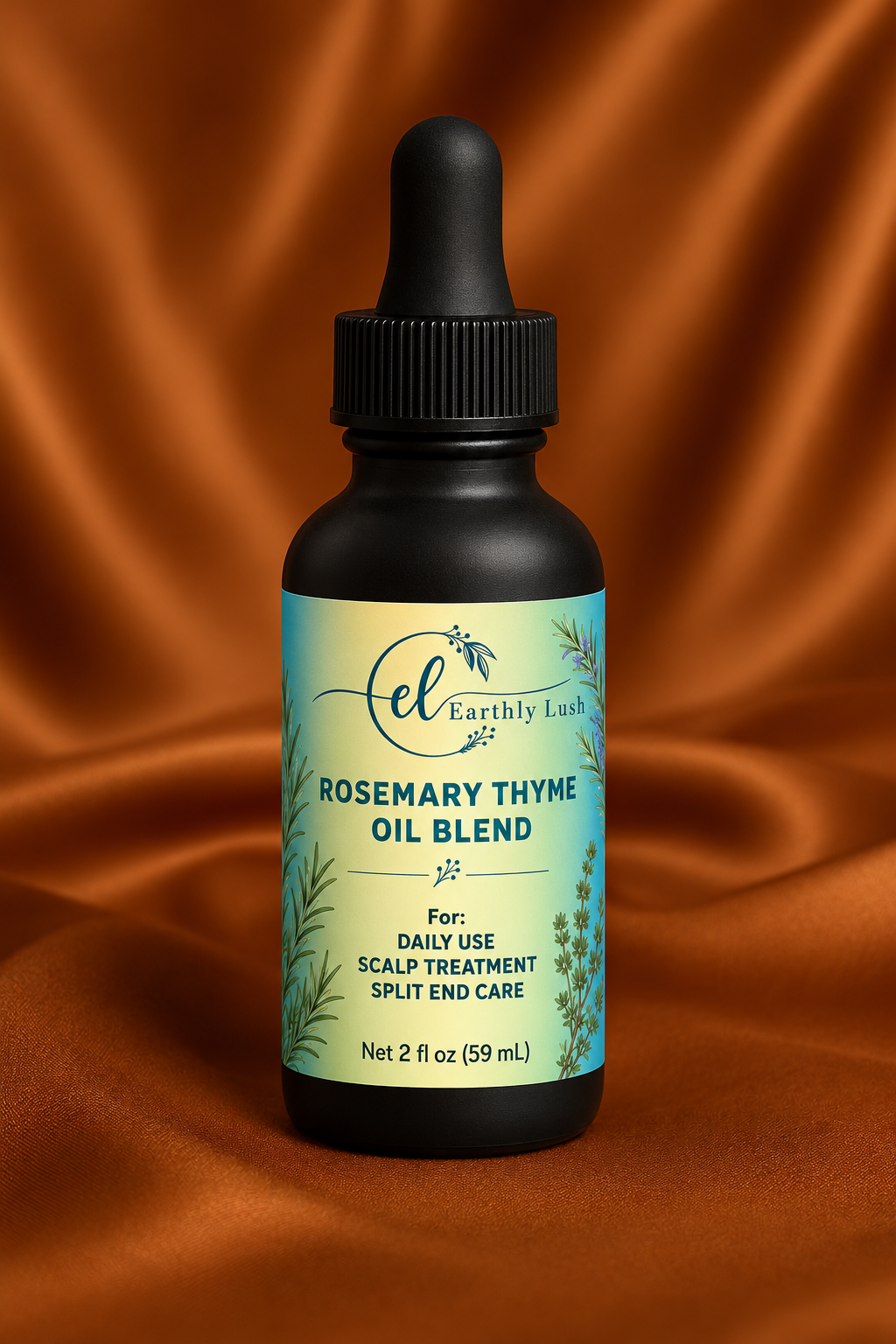
You also do not have to use a full care-card starting amount simply because it is printed. For fine strands, begin with a trace of Rosemary Thyme Oil Blend on your palms and assess a small area of the ends. There is room to adjust gradually.
Fine hair is about the individual strand
People often use “fine” and “thin” as if they mean the same thing. Fine describes the width of an individual strand. Density describes how much hair grows across the scalp. You may have fine strands in a dense head of hair, or fine strands with lower density.
That distinction affects application. Dense fine hair may need sectioning so the product reaches more than the outside layer. Lower-density hair may need especially careful placement to preserve the visual fullness of the style.
Length matters too. A short style has less total length to distribute product across than a longer one. The same number of drops can therefore produce a very different finish without either person having used the product incorrectly.
Choose one benefit to assess first
Try identifying what you want from the oil before deciding the dose. You might want the last few inches to feel smoother, a little more shine on the finished lengths or less roughness when the ends brush against your hands.
Avoid asking one application to change every feature of your hair. Fine strands will still be fine after an oil finish. More coating does not create more strands or change their underlying diameter.
A clear aim makes the result easier to judge. If you wanted smoother ends and achieved that with a very small amount, you can stop there. You do not need to continue until every section looks as glossy as a product photograph.
Let your palms do the distributing
Dispense a very small amount, then spread it across both palms and fingers. Touch the ends first, using a gentle smoothing motion. What looks like almost nothing in your hands may be enough for a light finishing pass.
Keep the first test away from the root area if volume there is important to you. Use the remaining trace on your hands for another section before adding more. This helps prevent a concentrated patch from making one area look much heavier than the rest.
If you have a lot of fine hair, divide it into a few manageable sections. Think of the initial amount as something to distribute across those sections, rather than an amount you must repeat for each one.
Compare damp and dry application
A damp application lets you place oil within the wash-day routine. A dry application lets you see the style you are adjusting and target particular ends. Either can be useful, but the amount that suits one may not suit the other.
When testing, keep your other products familiar. A heavy cream followed by oil is a different experiment from a light leave-in followed by oil. If the result feels weighed down, first consider whether two finishing layers are doing more than you need.
Try the comparison on ordinary days when you have time to observe the result. An important event is rarely the easiest moment to introduce several new products and a new styling method together.
Preserve the features you like
It is easy to judge hair care by a single ideal: maximum shine, perfect smoothness or a dense-looking finish. Your preferred result may be softer movement, visible curl definition or volume that lasts through the day.
Use those preferences as part of the assessment. Does the oil make your ends more pleasant to handle? Does your hair still move as you like? Does the amount feel comfortable later, rather than only during application?
If the finish is too heavy, reduce the next dose or limit it to a smaller area. If you keep using less and still dislike the result, it is reasonable to choose a different place for oil in your routine or leave that step out.
Keep conditioning and gentle handling in the picture
Fine hair still benefits from a suitable cleansing and conditioning routine. Oil can contribute lubrication and a cosmetic finish, but it should not become a reason to skip the steps that make detangling easier.
Handle knots patiently and avoid using force to test whether the oil has created enough slip. If the ends repeatedly catch, look at their condition and the rest of the routine as well as the finishing product.
Our care card describes two to three drops for a general finishing application. Your own starting point may be smaller. At Earthly Lush, the useful outcome is that you understand how the product fits your hair, with enough control to keep the qualities you already love.


Comments