Detangle Your Natural Hair Without Rushing It

Detangling can become the part of hair care you put off because you remember how long the last session took. By the time you begin, you may already feel impatient with the knots.
A more comfortable process starts before the comb moves through the hair. Preparation, section size and the way you respond to resistance can change the experience. The aim is to make the work manageable without turning speed into the main measure of success.
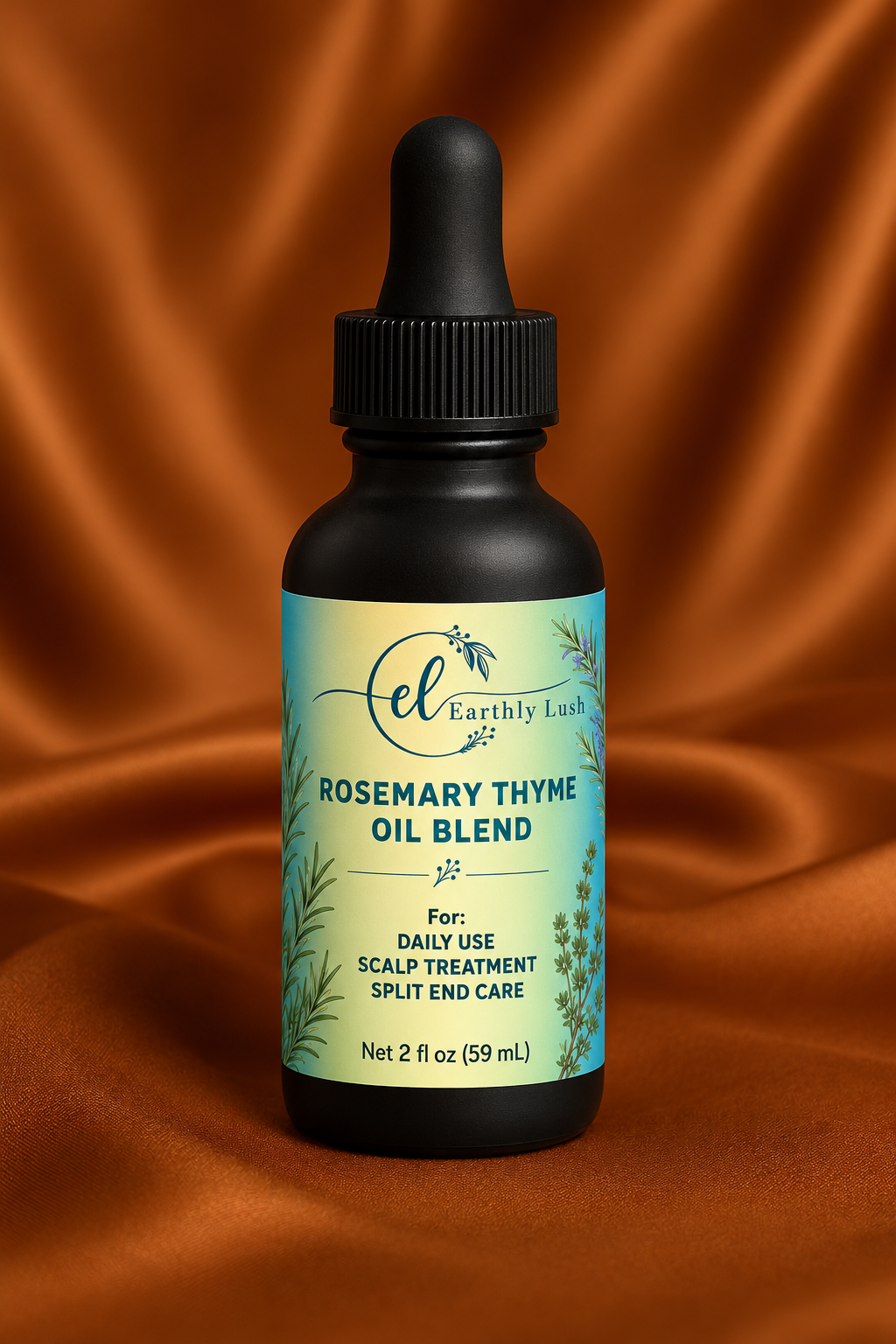
Rosemary Thyme Oil Blend can contribute to a smoother-feeling finish, but detangling deserves its own attention. A finishing oil should not become the only thing standing between a knot and a forceful pull.
Prepare the hair for the task
For curly hair, dermatology guidance recommends detangling with appropriate conditioning and gentle handling. Follow your conditioner or detangling product’s directions rather than assuming every product is meant to be used in the same way.
Give the product a chance to reach the lengths you need to work through. A well-coated outer layer will not help a knot underneath if that section never received attention.
If you are removing an older style, allow time to release it carefully first. Taking down the arrangement and detangling the loose hair may need to be treated as two related tasks.
Divide the work into manageable sections
A section should be small enough that you can understand where the resistance is coming from. If you are repeatedly catching the same area without seeing the knot, the section may be too large.
Keep completed sections separate so you do not have to work through them again. This is a practical way to reduce repeated handling while making progress easier to see.
You do not need to compare your section size with someone else’s. Length, density and texture influence what feels manageable in your hands. Choose the size that lets you work patiently and maintain control.
Begin where the knot can be released
Work gently from the ends, moving upwards as the lower part becomes manageable. Starting with a full-length pull from the roots can push resistance into a more difficult knot.
Support the section with your other hand so the movement is not transferred unnecessarily to the scalp. When you meet resistance, stop and look at it rather than repeating the same forceful motion.
You may use fingers and an appropriate wide-tooth comb or detangling tool as part of the process. The tool matters less than whether you are working in a way that avoids yanking through the problem.
Know when to add slip and when to pause
If a section has become difficult to handle, check whether it needs more of the appropriate conditioning or detangling product, applied according to its directions.
Adding finishing oil over an unresolved knot can make the surface feel more lubricated without making the structure of the knot easier to understand. Do not use the improved feel as permission to pull harder.
For a particularly difficult tangle or matting, getting help from a qualified stylist may be more useful than continuing while frustrated. Asking for help can protect both your time and the hair you are trying to care for.
Finish with the amount your hair needs
Once detangling and the relevant cleansing or conditioning steps are complete, decide what the style needs next. That is a clearer point to assess a finishing application.
Our care card describes spreading two to three drops of Rosemary Thyme Oil Blend between the palms and smoothing over damp or dry mid-lengths and ends. Start with less when a lighter amount suits your hair.
Notice whether the ends feel more comfortable during gentle handling. You do not need to keep adding product to prove that detangling was thorough, and a comb does not need to be passed through the same section repeatedly once the work is done.
Make the next session easier to begin
Think about where tangles appeared and what happened between wash days. Repeated friction, an older style or constantly manipulating the same ends may be worth addressing.
A comfortable nighttime arrangement and a style you can maintain can reduce unnecessary work later. They will not eliminate every knot, but they may make the next session feel less daunting.
Care takes attention, and some days it takes more time than you hoped. At Earthly Lush, I want the information around the blend to support that real experience: useful preparation, patient handling and a finishing step with a clear place.


Comments