How Much Hair Oil Should I Use?

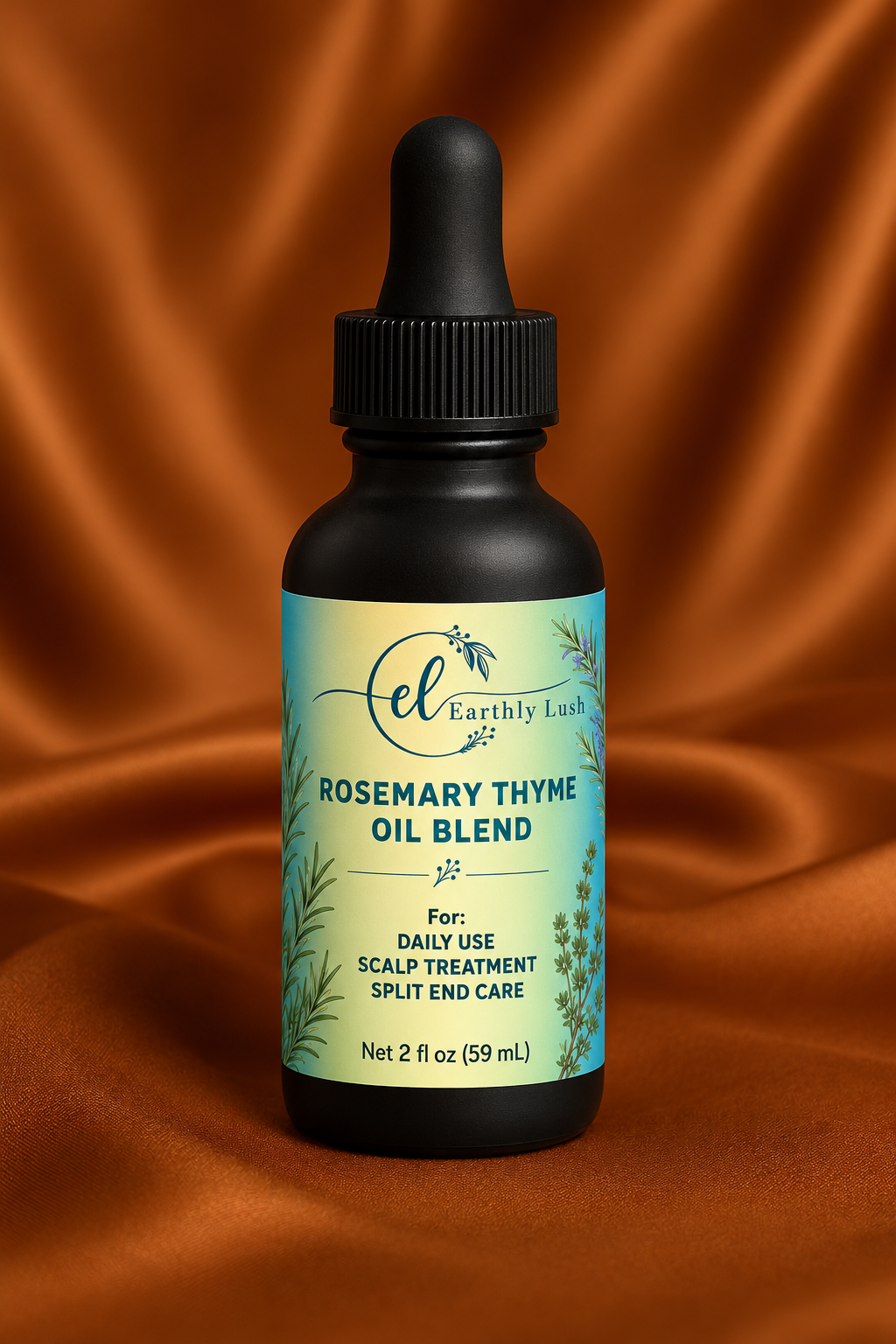
For a light finish with Rosemary Thyme Oil Blend, our care card starts with 2–3 drops spread between your palms, then smoothed over damp or dry mid-lengths and ends. Start with less if your hair is easily weighed down, distribute it first, and assess the result before adding more. These are finishing directions for the lengths and ends; a few drops and a full dropper are very different amounts.
A few drops can look like very little when you have a full head of hair. It is understandable to wonder whether you are using enough, especially if your ends have felt rough for a while. Then there is the opposite experience: you add a little more, and a soft finish turns into a heavy one.
The amount that suits you depends on the part of your hair you are treating and the result you want. Finishing your ends is a different task from following scalp-care directions. A useful starting point gives you something to assess, rather than a rule that assumes everyone has the same hair.
For a finishing application, Earthly Lush’s care card starts with two to three drops of Rosemary Thyme Oil Blend spread between your palms and smoothed over damp or dry mid-lengths and ends. Here is how to make that small starting amount work more thoughtfully.
Start by choosing the area
Before dispensing oil, decide where you want the difference to show up. Are you smoothing your ends, reducing the rough feel through the lengths, or adding a little shine to a finished style? Naming the area helps you avoid covering your roots simply because they are easiest to reach.
Mid-lengths and ends have been exposed to more handling than newly grown hair near the scalp. They may benefit from a different amount of finishing product. Meanwhile, the root area may already have enough natural oil or styling product for the look you want.
Spread the initial amount across your palms and fingers before touching your hair. That turns a few separate drops into a thin coating you can distribute. It also makes it easier to control the application than depositing a concentrated patch in one place and trying to move it afterwards.
Hair thickness and hair density are different
Fine hair describes the width of individual strands. Density describes how many strands grow across an area of scalp. You can have fine strands and a lot of hair, or thicker strands with lower density. This is one reason a single “for fine hair” rule can be frustrating.
A person with dense hair may need to work in sections to reach the ends evenly. That does not automatically mean pouring out more oil at the beginning. Sectioning can reveal whether the original amount was simply sitting on the outer layer.
If your hair is fine or you want a very light finish, start with less than the care-card amount and assess a small section. If your hair is fuller or longer, distribute your starting amount first, then add a little only where the feel is still uneven. The next addition should answer a specific need.
Judge the finish with your hands as well as your eyes
Shine can be a useful part of the result, but it is not the only signal. Darker hair and particular lighting can make a light coating look dramatic. In other light, the same amount may barely show.
Feel for whether the hair moves comfortably and whether the ends feel less rough during gentle handling. Notice whether your fingers slide through a manageable section more easily, without forcing a knot. Also notice if strands have become unusually coated or if your preferred volume has dropped.
Try to assess the hair after you have distributed the oil and let it settle. Adding more immediately can make it hard to tell what the first application achieved. There is no reward for emptying the dropper: the useful amount is the amount that gives you the finish you actually like.
Count the products already on your hair
The same number of drops can feel different on freshly washed, conditioned hair and on hair carrying several days of styling layers. Leave-in conditioner, butter, cream and gel may all affect how another product spreads or feels.
If oil feels heavy one day, that does not necessarily mean the bottle has changed or your hair has suddenly become a different type. Think about what is already there. You may need a lighter application, a different point in the routine, or simply a wash when it is due.
This is also why an influencer’s dose is hard to copy. You may be seeing the final step without seeing the products underneath, the haircut, the preparation or the styling goal. Use another person’s routine as a question to explore, not as a measurement you have to match.
Give yourself a repeatable starting point
For the next finishing application, keep the experiment simple. Note whether the hair is damp or dry, where you applied the oil and roughly how much you used. You do not need a spreadsheet; a short note on your phone is enough.
At the next comparable application, adjust one thing. Perhaps you use a smaller amount, divide the hair more carefully or focus entirely on the ends. Changing all three at once makes it difficult to learn which change helped.
With Rosemary Thyme Oil Blend, our printed method gives you a place to begin. Your observations tell you how to refine it. A good routine should become easier to repeat, with less second-guessing and fewer last-minute additions.
If you keep adding oil because your hair still feels dry, look beyond the dose. Cleansing, conditioning, accumulated product and damage can all influence the feel of the hair. The answer may be a different part of your routine, rather than another full dropper.


Comments