Should I Apply Hair Oil to Damp or Dry Hair?

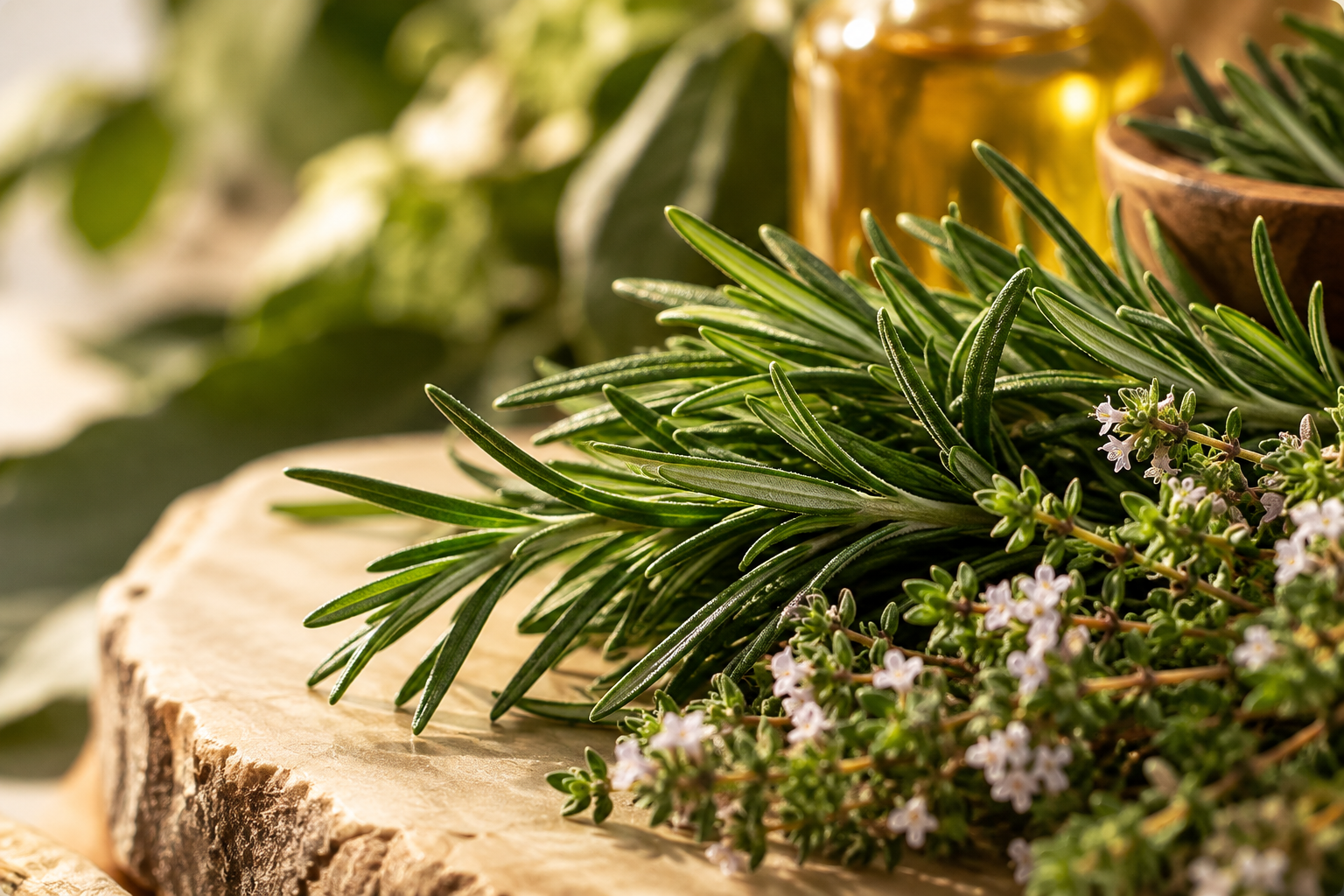
You can use Rosemary Thyme Oil Blend as a light finish on either damp or dry mid-lengths and ends. Damp application can fit into your post-wash routine; dry application lets you target a section or your ends when refreshing a style. For this method, begin with 2–3 drops between your palms, or less for an easily weighed-down finish. Follow the directions for the conditioner and styling products around it.
If you have tried hair oil both after washing and later in the week, you may have noticed that the finish is different. On damp hair, it becomes part of the way the style dries. On dry hair, you can feel the change immediately. Neither timing has to be the one correct choice for every head of hair.
The better question is what you want the oil to contribute at that moment. Are you building a wash-day routine, smoothing the ends of an existing style, or trying to solve a rough feel that keeps returning? Those are different starting points.
Earthly Lush’s care card allows a light finishing application to damp or dry mid-lengths and ends. Understanding the difference helps you choose the timing with purpose, rather than following a sequence that does not suit your hair.
What damp application offers
Applying a small amount while the hair is damp lets you distribute it as part of your post-wash preparation. You can work through manageable sections while you are already paying attention to conditioning, detangling and arranging the style.
The oil is one layer in that routine. It does not replace the rinse-out conditioner you used after shampooing or automatically perform the same job as a leave-in product. Oils can contribute lubrication and a smoother feel, while conditioner formulas are designed around their own conditioning functions.
For a finishing application, “damp” need not mean dripping. If water is running down your hair, it can be harder to assess the amount and placement. Follow your other products’ directions, remove excess water gently and apply the oil where you want the finishing benefit.
What dry application offers
Dry hair gives you a clearer view of the style you already have. You can see which ends feel rough, which sections look less smooth and whether the roots need to stay light. That makes a small, targeted application useful.
Spread a little oil between your palms, touch the areas that need it and avoid repeatedly working through sections that already feel comfortable. If you are maintaining curls or a twist-out, use a gentle smoothing movement that does not pull the shape apart.
The immediate result can be tempting: a little shine appears, so another application seems likely to improve it again. Pause and feel the hair before adding more. A finish that looks good while you are applying it may feel too coated once several layers have accumulated.
Why the sequence around the oil matters
Online routines often present an exact order of liquids, creams and oils as if the sequence alone determines success. In practice, the formulas, the amount, your hair and the intended style also matter. One person’s successful order is not proof that every product combination should follow it.
Start with the directions for the actual products you use. A rinse-out product needs to be rinsed out. A heat protectant has its own application instructions. A gel may behave differently when layered with an oil or cream.
If you are testing where Rosemary Thyme Oil Blend fits, keep the rest of the routine familiar. Compare a small finishing amount after conditioning with a small application on a later dry-hair day. That tells you more than changing the shampoo, leave-in, gel and oil timing together.
Separate a cosmetic finish from the cause of dryness
Hair can look shiny and still feel rough or be difficult to detangle. An oil coating changes the surface feel; it does not tell you that every other need has been met. Repeatedly adding oil may leave you with a coated feeling while the original concern remains.
Think about whether you conditioned after washing, whether the product reached the lengths and whether buildup is affecting the finish. Chemical processing, repeated heat and everyday friction can also change how the fibre behaves.
If dry application gives a short-lived improvement but the same problem returns, use that as information. You may need to refine the wash-day routine or how you handle the hair. It does not mean you failed to choose the right minute to apply oil.
Compare the two methods fairly
Try each timing during comparable routines. For example, compare two wash days with the same conditioner and style, rather than comparing a freshly conditioned twist-out with a straightened style several days later.
Pay attention to what matters to you: manageability, softness, movement, how the ends feel and whether the finish lasts comfortably until the next step in your routine. Photographs can help, but your hair does not have to look glossy in every light to be well cared for.
You may decide that damp application is your regular method and dry application is an occasional touch-up. You may prefer a tiny dry finish because it is easier to control. Both are reasonable observations when they come from your own experience.
Our care-card starting point is two to three drops spread between your palms for the lengths and ends, with less if that suits your hair. Let the result guide the adjustment. The aim is a routine you understand well enough to repeat, rather than another rule to memorise.


Comments